

When Theo Epstein addressed fans at the Cubs Convention, he did more than introduce a policy — he sent a message about accountability, discipline, and competitive standards.
The new “sleep rule” is simple in principle: players will no longer be allowed to sacrifice rest for nightlife. But the implications could be significant. Epstein made it clear that inadequate rest is not a harmless personal choice — it directly affects performance, recovery, and ultimately wins and losses.
The Performance Impact of Epstein’s Sleep Rule
Epstein did not frame the issue as moral policing. He framed it as performance management.
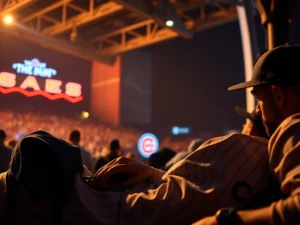
“Players who routinely sacrifice sleep are compromising their preparation,” he explained. “And preparation shows up on the field.”
Baseball is a sport built on repetition, reflexes, and recovery. A 162-game season demands consistent physical and mental sharpness. Studies in sports science consistently show that sleep deprivation impairs reaction time, decision-making, and muscle recovery — all critical components for hitters tracking a 95-mph fastball or pitchers maintaining command deep into games.
Epstein also acknowledged lessons learned from his time in Boston. During his final year with the Boston Red Sox, reports surfaced of players spending off-days drinking, ordering fast food, and playing video games late into the night. While not solely responsible for team struggles, the culture was widely criticized as lacking accountability. Epstein was candid:
“It has been a factor in compromising some careers.”
That admission underscores the central argument: rest is not optional if a team expects sustained excellence.
Cubs Player Reactions
Several players voiced cautious support for the initiative.
One veteran noted, “It’s not about taking away fun. It’s about making sure we’re at our best when it matters.”
A younger player added, “If better sleep gives us even a small edge over 162 games, that adds up.”
Still, there is nuance beneath the public approval. Younger players — especially those new to Chicago — have yet to experience the full pull of Wrigleyville’s nightlife. Veterans, aware of how small habits compound over long seasons, may be more supportive precisely because they’ve seen the consequences.
Lessons from the Past

Baseball history is filled with cautionary tales. Talented players whose performance declined amid reports of excessive late nights often saw injuries increase and consistency disappear. Fatigue doesn’t always show up immediately — it manifests in slower recovery, diminished plate discipline, and minor injuries that linger.
The final season of Epstein’s tenure in Boston serves as a clear case study. A talented roster underperformed expectations, and clubhouse discipline became a storyline. While not the sole cause, the lack of structured accountability was viewed as contributing to the team’s inconsistency.
The takeaway: ignoring rest rarely produces championship results.
The Enforcement Challenge
Chicago presents a unique obstacle. Bars in Wrigleyville stay open until 4 a.m., and the neighborhood’s close proximity to the ballpark makes temptation immediate and constant.
Epstein plans to distribute a “sleep rule” pamphlet outlining expectations. But policy alone will not ensure compliance. Effective enforcement may require:
- Leadership accountability — veterans modeling discipline.
- Data tracking — leveraging wearable technology to monitor recovery and fatigue.
- Clear consequences — financial penalties or reduced playing time for repeat violations.
- Cultural reinforcement — framing rest as a competitive advantage, not a restriction.
Rather than policing nightlife, the organization must embed sleep into its high-performance culture.
A Shift in Organizational Identity
This rule represents more than a lifestyle adjustment — it signals a philosophical shift. The Cubs are aiming to build a culture where preparation is non-negotiable and marginal gains are pursued relentlessly.
In a sport where small percentages determine postseason positioning, improved recovery could translate into sharper late-season performance, fewer soft-tissue injuries, and greater consistency across the roster.
Conclusion
Theo Epstein’s sleep rule is not about curbing fun — it is about maximizing performance. If properly enforced and embraced internally, the policy could help the Cubs avoid the pitfalls of past clubhouse complacency and create a sustainable competitive edge.
Over 162 games, discipline compounds.
And in baseball, the smallest edge often separates contenders from champions.
