
NCAAF Team Trends

NCAAF team trends help identify how specific college football programs have performed inside historical betting markets. College football is especially sensitive to team identity, conference reputation, coaching systems, schedule strength, public perception, and late-season motivation. That makes team-based trends useful — but only when they are interpreted with price, sample size, roster context, and market timing in mind.
This page is a historical NCAAF team trends archive. The trends below are not meant to be treated as automatic picks. They are examples of team-specific betting patterns that can help identify market behavior, public overreaction, conference pricing errors, totals tendencies, or situational betting angles worth deeper review.
How to Use NCAAF Team Trends
NCAAF team trends should be used as research signals, not blind betting commands. A strong historical record may point toward a useful angle, but the current line, opponent, roster, injuries, coaching staff, conference strength, and market movement still matter.
Before using any NCAAF team trend, ask:
- Is the sample size large enough?
- Does the trend still apply to the current team, coach, roster, and conference environment?
- Was the trend profitable against the spread, straight up, or against the total?
- Did the team create value, or was the market simply slow to adjust?
- Does today’s line still offer value?
- Has the market already moved?
- Does the trend fit with current Raw Numbers, matchup data, and market timing?
The goal is not to bet every team trend. The goal is to identify which team-based patterns deserve deeper analysis.
Why Team Trends Matter in College Football
College football markets are different from professional sports markets because the gap between teams can be enormous. Brand-name programs, conference strength, recruiting depth, quarterback continuity, coaching schemes, and public perception can all influence the betting line.
That creates both opportunity and risk.
A popular team can be overpriced because the public trusts the logo. A smaller program can be undervalued because the market is slow to recognize improvement. A high-powered offense may push totals higher than fair value. A dominant defense may suppress scoring expectations too far.
College football is also heavily shaped by schedule context. Teams can look elite against weak competition, underrated after a misleading loss, or overvalued after a nationally televised blowout.
That is why NCAAF team trends should always be read through the lens of market value.
NCAAF Team Trends Database
The trends below are historical NCAAF team betting trends. They are kept here as a research archive for studying team-specific market behavior, spread results, totals patterns, conference perception, coaching-system effects, and situational betting angles.
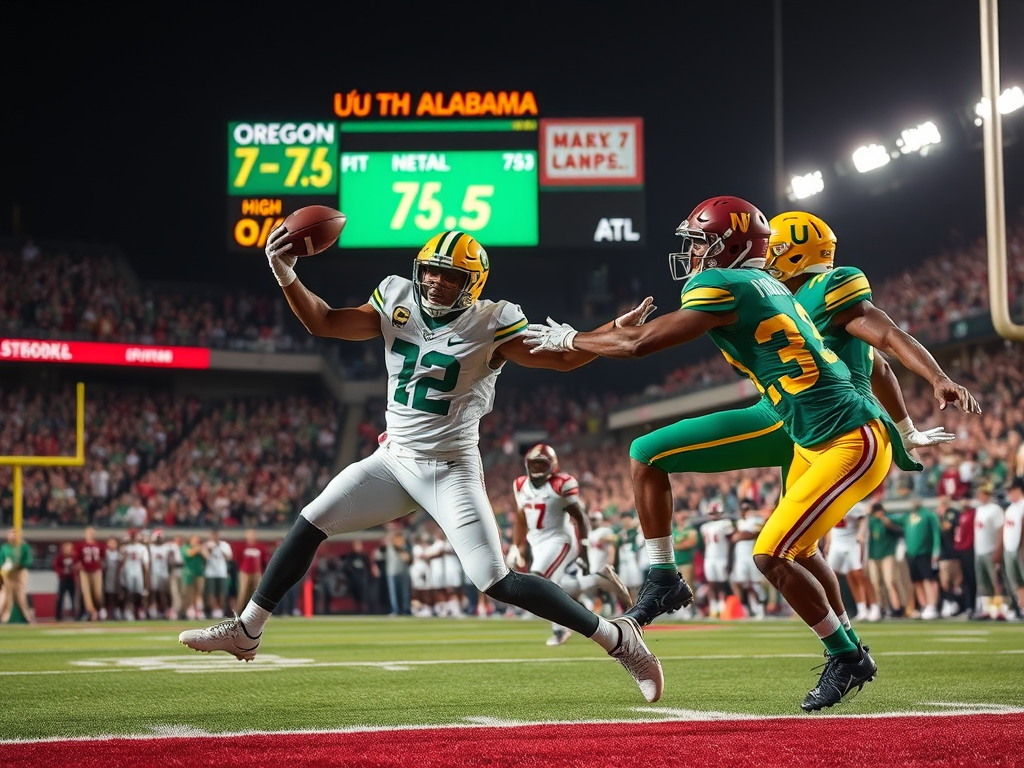
#001 Oregon is 16-3-0 OVER (+6.76 ppg, 84.2%) the total under head coach Chip Kelly after covering 4 or more of their last 6 games. On January 3rd, 2013, Oregon will face Kansas St. with a massive 75.5 O/U line.
#002 Alabama is 14-2 (+19.06, 87.5%) SU under head coach Nick Saban at home after four or more straight wins In addition to their impressive record, Alabama consistently ranks high in ncaafb team performance statistics across various metrics.
#003 Oregon is 12-1 (+8.81, 92.3%) ATS (13-0 SU) since 2010 on the road with a total higher than 60 points. 10-0-0 ATS since 2011.
#004 The Stanford Cardinals are on a 7-0 run now after correcting a 6-16 loss to Central Florida in game one. Once a train gets rolling it is impossible to stop. Momentum is everything in College Football. As the season progresses, NCAAF betting trends for this season indicate that teams like Stanford are gaining traction. Bettors are increasingly focusing on how momentum shifts can affect the odds.
What Makes an NCAAF Team Trend Useful?
A useful NCAAF team trend usually has more than a strong record. It should also have a logical football or market explanation.
The strongest NCAAF team trends tend to involve:
- Conference perception
- Team identity
- Coaching-system continuity
- Home/road splits
- Favorite or underdog role
- Totals behavior
- High-scoring offensive systems
- Defensive efficiency patterns
- Schedule strength
- Post-win or post-loss response
- Market overreaction after blowouts
- Public bias toward ranked or brand-name teams
A weak trend is usually just a record with no clear reason behind it.
That does not mean every trend needs to be perfect. Historical betting research often starts with observation. But before a team trend becomes useful in a current betting decision, it needs to be checked against today’s price and market conditions.
Why ATS and Totals Results Matter More Than Team Reputation
College football reputation can be misleading.
A program can be nationally respected and still be overvalued by the market. Another team may be ignored by the public but consistently create betting value because the market does not fully price its improvement.
That is why against-the-spread and totals results matter.
Straight-up records can show team quality, but ATS records show whether the team exceeded market expectations. Totals records can reveal whether the market consistently mispriced pace, scoring environment, defensive strength, or public over/under bias.
The better questions are:
- Did the team beat the market expectation?
- Was the team undervalued in this situation?
- Was the team overpriced because of brand name, ranking, or conference reputation?
- Did the trend produce real betting value?
- Does the same logic still apply today?
In NCAAF betting, team analysis only matters if it connects back to the number.
How NCAAF Team Trends Can Reveal Market Bias
College football betting markets are heavily influenced by narratives. Rankings, playoff talk, conference prestige, rivalry history, national television games, and recent blowouts can all shape public perception.
That perception can distort pricing.
For example, a ranked favorite may attract public support even after the line has moved too far. A team from a less respected conference may be undervalued because the public does not trust the schedule. A high-tempo offense may create public over bias. A defensive team may be underappreciated because it does not win in flashy ways.
Team trends can help expose these market tendencies.
But the trend still needs discipline.
A team angle that was valuable years ago may become less useful after the market recognizes it, the coach leaves, the quarterback changes, or the conference environment shifts.
Common Mistakes When Using NCAAF Team Trends
Blindly Betting the Team
A strong team trend does not mean the next game is automatically playable. The line may already reflect the pattern. The roster may be different. The opponent may create a bad matchup. The market may have already moved.
A good trend still needs a good price.
Ignoring Coaching and Roster Changes
College football changes quickly. Coaches leave. Coordinators change. Quarterbacks graduate. Transfer portal movement reshapes rosters. Defensive systems change. Conference schedules shift.
A trend that made sense under one coach or roster cycle may not apply the same way later.
Treating Old Data as Current
Historical team trends are useful for research, but they should not be treated as automatically current. A trend from an earlier college football era may still be useful as a market example, but it needs current context before it influences a bet.
Ignoring the Line
This is the biggest mistake.
A team trend may look strong, but if the spread has moved too far, the edge may already be gone. A team may be profitable as a short favorite but not as a large favorite. A trend that worked at -3 may not work at -10.5.
The number matters.
How NCAAF Team Trends Fit With Raw Numbers
NCAAF team trends become more useful when they are combined with current market data. A historical team trend may point toward a possible edge, but Raw Numbers help evaluate whether the current betting board still supports that angle.
A stronger workflow looks like this:
- Review the team trend.
- Check the current spread, total, or moneyline.
- Compare the current number to the projected number.
- Review line movement.
- Evaluate injuries, rest, schedule strength, and motivation.
- Decide whether the trend still has value.
- Pass if the number no longer supports the angle.
That process is much stronger than blindly following a historical trend because the record looks impressive.
The Bottom Line on NCAAF Team Trends
NCAAF team trends can be valuable because college football markets are shaped by team identity, conference reputation, coaching systems, rankings, and public perception. But the trend itself is only the beginning of the analysis.
The real question is whether the market is mispricing the team, conference, role, or game situation today.
Used correctly, NCAAF team trends can help identify potential market inefficiencies. Used carelessly, they can lead to overfitting, stale data, and bad prices.
The disciplined approach is to keep the trends, study the patterns, compare them with current Raw Numbers, and only act when the market still offers value.
Access More NCAAF Betting Research
NCAAF Raw Numbers
Daily NCAAF market data, projections, and betting research structure.
NCAAF Trends
The main NCAAF betting trends hub for broader college football market research.
NCAAF Coaching Trends
Coach-level NCAAF betting trends that can be compared with team-specific patterns.
NCAAF Systems
Historical NCAAF betting systems and database-driven market research.
How This Fits Into the Market
Sports Betting Market Mechanics
Learn how line movement, public betting, sharp money, and pricing shape betting markets.
Public Bias and Market Distortion
Understand why popular teams, rankings, conferences, and narratives can distort betting prices.
Sports Betting Systems
See how betting systems should be interpreted as market signals rather than blind picks.
Process & Proof
Documented Betting Results
Review long-term documented performance context and why betting results should be measured over time.
Raw Numbers
Access the Raw Numbers dashboard for daily market-based betting research by sport.

This is helpful because NCAAF teams can be priced so differently depending on conference, reputation, and recent results. The market perception angle matters a lot here.
Exactly. College football has a wide gap between public perception and actual team quality because brand names, conferences, and recent blowouts can heavily influence pricing.
That’s why team trends need to be viewed through a market lens. The goal is not just to identify who is good or bad, but whether the market is pricing that team correctly.
Great resource. College football team trends can get noisy fast, so I like that this keeps the focus on patterns that can actually be tested instead of just team narratives.