
Market Behavior Systems

Betting systems based on sportsbook market behavior, including line movement, steam, public betting percentages, and price inefficiencies. These systems focus on understanding how betting markets react rather than team-specific performance.

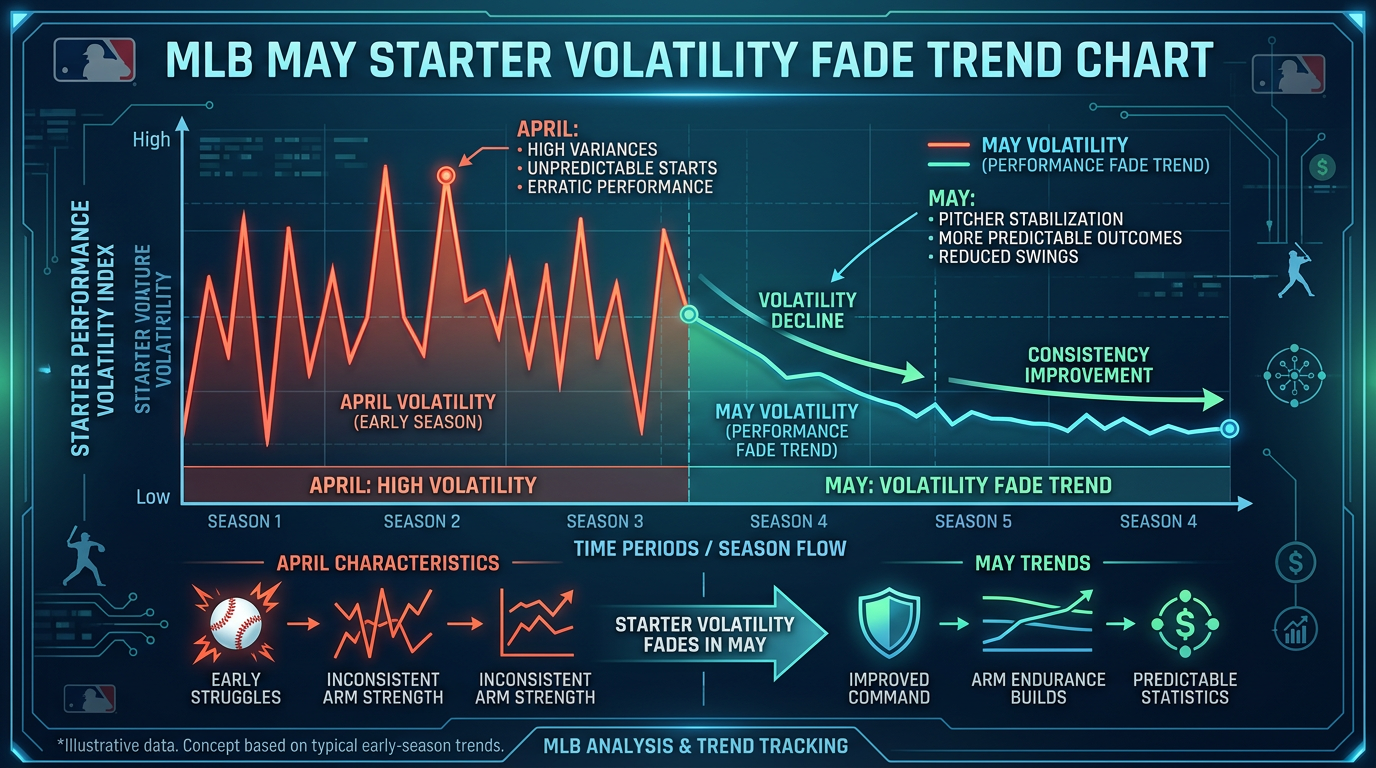
  • MLB May run line trend starter volatility fade system

    MLB May Run Line Trend: Fading a Narrow Starter Volatility Setup

    The MLB May run line trend indicates a significant historical fade signal against teams that experience starter volatility after prior high-pressure outings. With a poor record of 2-19 straight up and 3-18 on the run line, it highlights how market perceptions may misprice underlying weaknesses. This trend should be used cautiously alongside broader analysis.

  • NFL betting systems data analysis showing market trends and betting lines

    The Best NFL Betting Systems Backed by Historical Data

    NFL betting systems can be effective if they track market behavior and identify pricing inefficiencies rather than relying on superficial trends. Successful systems exploit public biases and situational factors, demonstrating long-term profitability through comprehensive data analysis. Understanding the reasons behind market movements is crucial for achieving consistent betting success.

  • Sharp Money in Sports Betting: How Market Signals Actually Work

    Sharp Money in Sports Betting

    Sharp money in sports betting is often misunderstood and refers to wagers that prompt sportsbooks to adjust their lines based on perceived risk. It influences market prices rather than identifying who bets. Effective interpretation requires a structured approach, considering timing, market behavior, and context, rather than relying solely on line movement.

  • Sharp Money Sports Betting NHL SDQL Trend Backing Low-Loss Teams in Strong Site Form

    NHL Sharp Money Sports Betting SDQL Trend: Backing Low-Loss Teams

    This NHL SDQL trend targets early-season teams exhibiting stability and momentum, where market pricing lags behind their form. The formula measures teams with limited losses and positive performance. Historical data shows significant profitability, highlighting a repeatable market inefficiency, allowing bettors to identify value before proper market adjustment occurs.

  • NBA ATS Trends: Fading Short-Term Strength in Strong Seeds

    NBA ATS Trends: Fading Short-Term Strength in Strong Seeds

    The NBA ATS trend indicates that strong-seeded teams coming off a loss often underperform against the spread, despite market perceptions of reliability. This phenomenon arises from a combination of inflated spreads due to “bounce-back” narratives and incorrect interpretations of stability, revealing systematic market overpricing.

  • MLB Underdog Betting System

    MLB Underdog Betting System

    This MLB underdog betting system reveals that consistently betting on undervalued road underdogs, particularly those coming off a loss against strong opponents, can yield profitability. Despite a 44.8% win rate, disciplined betting on these scenarios captures market inefficiencies, leading to a notable positive ROI and substantial profits.

  • How to Use SDQL (Sports Data Query Language)

    How to Use SDQL (Sports Data Query Language)

    SDQL (Sports Data Query Language) is a powerful tool for analyzing sports betting markets by extracting and quantifying data rather than generating predictions. Users should focus on understanding market behavior and avoid common mistakes like overfitting. SDQL helps identify pricing inefficiencies and supports a comprehensive betting strategy through disciplined analysis.

  • MLB Opening Day 2026: Data-Driven System Signals for March 27

    MLB Opening Day Systems Report:

    The report analyzes two data-driven systems for MLB Opening Day, revealing consistent historical patterns for betting performance since 2004.

  • Closing Line Value Explained: How Professionals Measure Betting Edge

    Closing Line Value Explained: How Professionals Measure Betting Edge

    Most bettors judge success by one thing: Did the bet win or lose? But professional bettors evaluate wagers very differently. Instead of focusing only on short-term results, they look at something far more important: Closing Line Value, often called CLV. Many experienced bettors believe that consistently beating the closing line is one of the strongest indicators…

  • NCAAF Betting Systems and Trends with SDQL

    NCAAF Trends

    Historical betting trends since 2008 show profitable strategies for specific team scenarios and coaching situations in football.

  • Why Raw Numbers Matter More Than Picks

    How Raw Numbers Improve Sports Betting Picks

    Most sports betting sites sell picks. They tell you what to bet — rarely why — and almost never how the decision was formed. Sharp bettors work the opposite way. They start with raw numbers, not opinions. Picks are simply the final expression of a process that begins long before a wager is placed. Picks Are…

  • Public Betting Bias and Market Psychology

    Why the Public Loses at Sports Betting (And How Markets Expose It)

    Most people who bet on sports believe they are making rational decisions.In reality, they are reacting — to recent results, headlines, narratives, and discomfort. Sports betting markets don’t punish a lack of information.They punish emotional behavior. That’s why the public consistently loses over time — not because they’re unintelligent, but because they are predictably human. The…

  • Price Sensitivity in Sports Betting

    Price Sensitivity in Sports Betting: When a Small Line Move Kills the Edge

    Not all betting edges are created equal. Some bets remain profitable even after the line moves. Others are destroyed by a half-point shift. Understanding price sensitivity — how fragile or durable a betting edge is — is one of the clearest separators between recreational bettors and professionals. how line movement impacts betting decisions is crucial for…

  • How public betting behavior distorts sports betting market prices

    Public Bias And Market Distortion in Sports Betting

    Why Betting Markets Aren’t Perfect Sports betting markets are efficient — but they are not neutral. Lines don’t move purely because of new information.They move because of money, and a large portion of that money is emotional, biased, and predictable. This is where public bias enters the equation — and where opportunity is created. 👉 What…

  • sports betting systems market data and pricing charts

    What Betting Market Systems Really Measure (And What They Don’t)

    In sports betting, the word system has largely lost its meaning. It’s used to describe everything from statistical research to superstition, from market analysis to disguised opinions. That confusion benefits sellers — but it harms bettors. A real betting system does not predict outcomes.It does not guarantee wins.And it does not replace judgment. Effective betting strategies…

  • steam moves

    Steam Moves vs Fake Steam: How to Tell the Difference

    The article distinguishes between real steam and fake steam in sports betting, explaining that real steam involves sharp, coordinated moves from respected bettors, while fake steam is driven by public betting or casual money. It emphasizes the importance of timing and origin of moves, cautioning against chasing steam, which often results in poor betting value.

  • key-numbers

    Key Numbers in Sports Betting: Why Half-Points Matter More Than You Think

    Most bettors see a half-point and think it’s minor. Professional bettors know it can be the difference between: This is where key numbers come in — and why price matters more than opinion. What Are Key Numbers? Key numbers are point spreads that games land on more often than others due to scoring patterns. In football…

  • Closing Line Value

    Closing Line Value (CLV) Explained: Why Beating the Market Matters More Than Winning Bets

    What Is Closing Line Value? Closing Line Value (CLV) measures the quality of your bet price. It compares whether your price was better or worse than the final market price at kickoff or tip-off. If you consistently place bets at better numbers than the closing line, you are beating the market. This is true regardless of…

  • Why Betting Percentages Lie

    Why Betting Percentages Lie (And What to Watch Instead)

    Most bettors start their analysis the same way: “Which side has more bets?” At first glance, betting percentages feel like insider information. If 75% of bettors are on one team, that must mean something… right? In reality, betting percentages are one of the most misleading data points in sports betting — and relying on them blindly…

  • Data-driven sports betting market analysis showing betting systems, historical data, and ProComputerGambler research

    How Sports Betting Markets Work: A Complete Guide to Line Movement, Sharp Money, and Market Signals

    Sports betting markets prioritize pricing uncertainty and managing risk rather than simply predicting winners. Understanding market forces, such as sharp money and public betting, is crucial. Key concepts include closing line value, market timing, and the importance of informed action to capture value in a constantly evolving pricing system.

  • Reverse Line Movement Explained: Why the Line Moves Against the Bets

    Reverse Line Movement Explained: Why the Line Moves Against the Bets

    If you’ve ever looked at betting percentages and thought, “How is the line moving the wrong way?” — congratulations. You’ve just noticed reverse line movement, one of the most misunderstood concepts in sports betting. Reverse line movement (RLM) is often where sharp bettors quietly reveal themselves, and understanding it can completely change how you read the…

  • sharp vs public betting

    Sharp Money in Sports Betting: How Market Signals Actually Work

    Understanding the difference between sharp money and public betting is crucial for sports bettors. Sharp money refers to informed wagers that influence market odds, while public betting consists of casual bets driven by recent performance or narratives. Successful betting strategies involve recognizing market reactions to these bets, particularly in situations of reverse line movement.

  • Why Betting Systems Fail: Variance, Math, and False Confidence

    Why Betting Systems Fail: Variance, Overfitting, and False Confidence

    Betting systems usually do not fail because one game goes wrong. They fail because the bettor mistakes a short-term pattern for a durable edge, ignores market price, underestimates variance, or sizes bets too aggressively. A real system must survive bad stretches, account for changing markets, and prove that its edge still exists after the obvious patterns…

  • Flat betting strategy for sports betting bankroll management

    Flat Betting Strategy: How to Manage Bankroll Without Chasing Losses

    A flat betting strategy helps sports bettors manage bankroll by using consistent unit sizing instead of chasing losses or increasing stakes emotionally. This guide explains how flat betting works, why it protects bankroll, and when it should be used as a disciplined baseline.

  • NFL Week 6 Picks: Dolphins vs Titans Top Play Analysis

    NFL Week 6 Picks: Data-Driven Analysis, Raw Numbers & Betting Systems

    Tom’s NFL analysis highlights a successful season with a 3-0 record on Top Plays, including a win with the Miami Dolphins at +108. He discusses his confidence in upcoming selections, particularly Miami’s performance post-bye week and potential betting strategies surrounding the Denver Broncos and New Orleans Saints for Week 6.

  • Miami Dolphins Dominate: Key Takeaways from NFL Weekends

    Miami Dolphins Betting: How to Interpret Dominant Performances in NFL Markets

    The Miami Dolphins’ dominant performance can alter public perception and betting markets significantly. However, value often lies in post-performance analysis rather than immediate reactions. Bettors should recognize that markets may over-adjust, creating opportunities for profitable betting by identifying mispriced outcomes rather than following narratives driven by short-term performance.

  • NFL Week 9 Betting Insights and Predictions

    Insights from NFL Market Structure Research for Week 9

    Introduction: Framing Week 9 Through the Market NFL Week 9 presents a full slate of matchups, including high-profile games like Chiefs vs. Bills and Ravens vs. Dolphins. Rather than approaching the week through predictions, this analysis focuses on how the betting market is behaving, where inefficiencies may exist, and how disciplined bettors interpret those signals. In…

  • The Bottom Line: Why MLB, NFL, and College Football Bet Differently

    The Bottom Line: Why MLB, NFL, and College Football Bet Differently

    Every year I get the same question: “Do you run the same betting formula across MLB, NFL, and College Football?” The answer is absolutely not. Each sport behaves differently.Each market reacts differently.Each has its own version of momentum, regression, and public bias. If you treat them the same, you lose. Let’s break down the structural differences….

  • Top NFL Play Selections for 2014 Playoffs

    Free NFL Conference Championship Picks

    Conference Championship Sunday is one of the toughest betting slates of the entire year. With only two games on the board, sportsbooks tighten lines while public betting volume surges. That combination creates a dangerous environment for casual bettors—but also opens the door for sharp, data-driven opportunities built on historical systems and market inefficiencies. Quick Picks (Best…

  • The Coveted .500 Mark MLB Betting System

    The Coveted .500 Mark MLB Betting System

    In Major League Baseball, the .500 record mark is one of the most misunderstood indicators in the betting market. While most bettors view it as a neutral benchmark, sportsbooks and public perception often treat it as a meaningful signal—creating subtle but exploitable pricing inefficiencies. This system is built to take advantage of those misinterpretations over a…

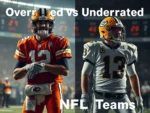
  • Overrated vs Underrated NFL Teams: How to Exploit Market Perception Each Week

    Overrated vs Underrated NFL Teams: How to Exploit Market Perception Each Week

    Each week during the NFL season, teams become overrated or underrated based on public perception — not true performance. The betting market is driven by emotion, recency bias, highlight plays, fantasy football narratives, and media overreaction. That’s where opportunity lives. If you understand how perception moves point spreads, you can consistently position yourself on the value…

  • When the Spurs Score | Spurs Contrarian NBA Team of 2016

    Contrarian NBA Betting Strategy: Identifying Overvalued Elite Teams

    A contrarian NBA betting strategy focuses on identifying pricing inefficiencies created by public perception, not simply predicting which team will win. Elite teams often attract inflated market prices, creating opportunities for disciplined bettors willing to evaluate value instead of narratives. Contrarian NBA Betting Strategy: Why Markets Overvalue Elite Teams A contrarian NBA betting strategy works because…

  • Key NFL Betting Trends for Week 3

    Key Elements of an Effective NFL Betting Strategy

    An effective NFL betting strategy focuses on identifying pricing inefficiencies through structured analysis and disciplined execution rather than short-term results. It relies on measurable performance edges, historical validation, and market awareness. Success requires consistent evaluation, selectivity, and a clear understanding of value, ensuring long-term profitability and risk management.

  • Why Early Line Timing Matters More Than the Pick Itself

    Why Early Line Timing Matters More Than the Pick Itself

    In NCAAF Week 10, the timing of bets is crucial for profitability. Bettors should place early bets on favorites and wait on underdogs due to sportsbook adjustments. Key numbers vary by sport, impacting the strategy. Understanding market movements and closing line value is essential for long-term success in betting.

  • Why Double-Digit Road Underdogs Cover More Than Bettors Expect

    Why Double-Digit Road Underdogs Cover More Than Bettors Expect

    One of the most uncomfortable positions in sports betting is backing a double-digit underdog on the road. Casual bettors hate it. Yet year after year, these are the exact spots where the market quietly leaks value. The scoreboard looks ugly, the favorite feels “safe,” and narratives scream blowout. But betting markets don’t price games based on…