
Save $52,641.00 Fading the Public!


Fading the public is one of the most common ideas in sports betting, but it is also one of the most misunderstood. The public can be directionally right about who is more likely to win a game and still be wrong about the price. That distinction is where the real market lesson begins.
What Does “Fade the Public” Mean?
Fading the public means betting against the side, total, or team that most casual bettors appear to be supporting.
The basic idea is simple: sportsbooks do not only price games around true probability. They also respond to demand, perception, popular teams, star players, recent results, media narratives, and recreational betting behavior. When too much casual money piles onto one side, the market can move away from fair value.
That does not mean the public is always wrong. It means the public is often late, price-insensitive, and emotionally driven.
The edge, when it exists, is usually not:
“The public likes Team A, so bet Team B.”
The better version is:
“The public has pushed this number far enough that the unpopular side may now offer better long-term value.”
Why the Public Can Pick Winners and Still Lose Money
One of the biggest mistakes bettors make is confusing picking winners with beating the market.
A public favorite can win the game outright and still be a bad bet. A popular over can have a reasonable chance to cash and still be overpriced. A heavily backed team can be the better team and still offer no value at the current number.
That is the heart of fading the public.
The question is not only:
Who is more likely to win?
The better questions are:
What price are we being asked to pay?
Has the market already adjusted?
Is the line now inflated by public demand?
Would this still be playable at the current number?
A team can be the correct side at -3 and a poor bet at -6.5. A total can have value at 43 and no value at 46.5. The same opinion can be sharp early and stale later.
Why Blindly Fading the Public Is Dangerous
Blindly fading the public is not a complete betting strategy.
It can fail for several reasons:
- The public may be on the correct side.
- The line may not have moved far enough to create value.
- Sharp money may be aligned with the public.
- Injury or lineup information may justify the move.
- The opening number may have simply been wrong.
- The public percentage may not represent actual money.
- Betting percentages may come from incomplete or recreational-facing data.
This is why “fade the public” should be treated as a market signal, not a rule.
A high public percentage can tell you where attention is concentrated. It does not automatically tell you where value exists.
The Real Lesson From Public Consensus Data
Public consensus data can be useful when it is interpreted correctly.
The important lesson is not that the public never wins. In many sports and time periods, casual bettors may correctly identify the stronger team at a high rate, especially in moneyline-heavy markets or when obvious favorites are involved.
The problem is that sportsbooks understand this demand.
When the public wants the obvious side, the price often becomes less attractive. That is where the betting market separates prediction from profitability.
A public side can be:
Correct about the winner
but
wrong about the price
That is the central reason the public can appear accurate while still losing over time.
When Fading the Public Can Make Sense
Fading the public tends to make the most sense when public demand appears to distort the number.
Some common examples include:
Popular teams receiving inflated lines
Public bettors often prefer recognizable brands, star players, and nationally televised teams.
Big favorites attracting casual money
Many recreational bettors would rather lay points with the “better team” than take an uncomfortable underdog.
Overs getting bet up too far
Casual bettors often prefer rooting for scoring, which can inflate totals in certain markets.
Recent results driving overreaction
A team that looked great last week may be overpriced this week. A team that looked bad may become undervalued.
Prime-time games creating narrative bias
Stand-alone games attract more recreational betting, which can make public sentiment more visible.
In each case, the fade only matters if the number has moved far enough to create value.
When Fading the Public Does Not Make Sense
Fading the public is weak when it becomes automatic.
It does not make sense to fade the public just because:
A side has more than 60% of tickets
Ticket count is not the same as sharp money or true market pressure.
A favorite is popular
Sometimes favorites are popular because they are correctly priced or still underpriced.
A team is public but improving
Public support does not erase real matchup advantages.
The line has not moved
If the public is heavy on one side but the line does not move, that may be more interesting than the percentage itself.
The market is reacting to real information
Injuries, weather, starting pitchers, rest, lineup changes, and motivation can justify market movement.
The goal is not to be contrarian for the sake of being contrarian. The goal is to identify when public behavior has created a pricing mistake.
Fade the Public vs Sharp Money
Fading the public and following sharp money are related, but they are not the same thing.
A public fade asks:
Where is casual betting demand concentrated?
Sharp money analysis asks:
Where does respected market influence appear to be moving the number?
The strongest setups often occur when the two ideas overlap.
For example:
- The public heavily supports one side.
- The line moves toward the other side.
- The unpopular side improves in price or market position.
- The movement appears inconsistent with ticket count.
- The final number suggests respected money resisted the public side.
That type of setup is stronger than simply betting against a popular team.
Why Price Matters More Than the Side
The biggest flaw in public-fade thinking is treating the side as more important than the number.
A bettor might say:
“The public is on the favorite, so I’ll take the dog.”
But the correct question is:
“At what number is the dog worth taking?”
There is a major difference between:
+3.5 and +2.5
+7.5 and +6.5
Under 48 and Under 45
+145 and +115
The betting market is not just about choosing sides. It is about buying positions at numbers that remain profitable over time.
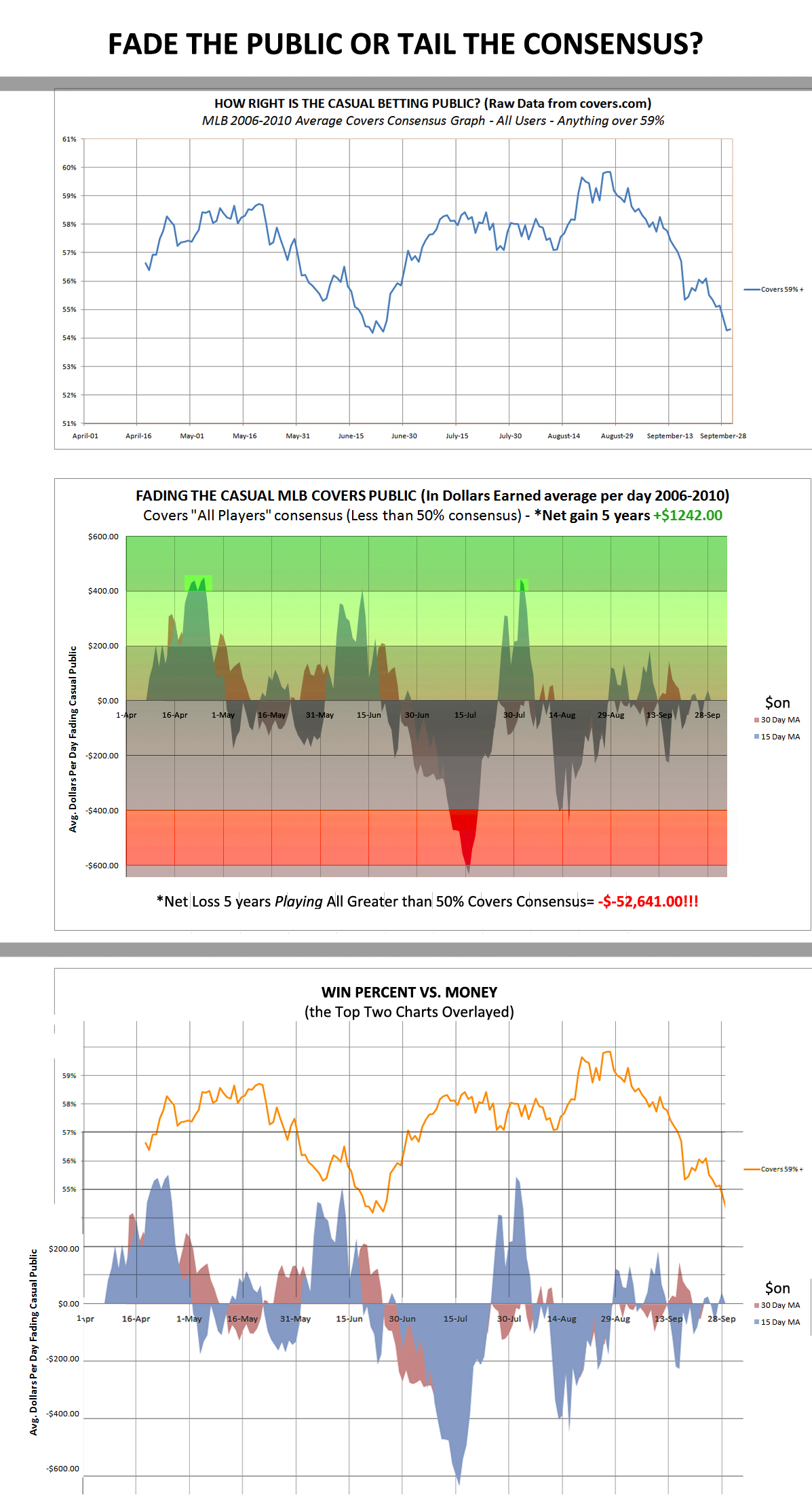
This is why fading the public should always be combined with price sensitivity, market timing, and closing line value.
How to Use Public Betting Data More Carefully
Public betting data can be useful, but it should be handled with discipline.
A better process looks like this:
- Identify where public attention is concentrated.
- Check whether the line has moved with or against that public pressure.
- Compare the current number to the opener.
- Ask whether the move crossed a key number.
- Look for injury, weather, lineup, or scheduling explanations.
- Determine whether the current price still offers value.
- Avoid treating ticket percentage as a standalone system.
Public data is one input. It should not be the entire betting decision.
Why Fading the Public Fits Market-Based Betting
The value of public-fade analysis is that it forces bettors to think like market participants instead of fans.
Fans ask:
Who do I think wins?
Market-based bettors ask:
What does the market believe, how has that belief changed, and is the current price still fair?
That is a very different process.
Fading the public is not about assuming casual bettors are stupid. It is about recognizing that recreational betting behavior often creates predictable pressure around favorites, overs, popular teams, star players, and recent narratives.
When that pressure creates a bad price, disciplined bettors can sometimes find opportunity on the other side.
Final Takeaway: Do Not Fade the Public Blindly
Fading the public can be useful, but only when it is connected to market movement, price, timing, and context.
The public is not always wrong. In many cases, the public can identify the more likely winner. The problem is that the more obvious side is often already taxed by the market.
The strongest betting approach is not blind contrarianism. It is disciplined market analysis.
Use public betting data to ask better questions:
Is this side popular because it is correct, or because it is obvious?
Has the number moved too far?
Is the unpopular side now priced attractively?
Does the market movement confirm or reject public sentiment?
Would this bet still make sense at the current number?
That is the real value of fading the public.
Not automatic opposition.
Market discipline.
Related Market Analysis
Why the Public Loses at Sports Betting
Learn why public bettors can understand teams and still lose because of timing, pricing, and emotional market behavior.
Public Bias and Market Distortion
See how public perception can move betting markets away from fair value.
Sharp Money vs Public Betting
Understand the difference between casual betting volume and respected market influence.
Reverse Line Movement Explained
Learn why a line sometimes moves against the side receiving the most visible betting support.
Price Sensitivity in Sports Betting
See why a small line move can turn a good bet into a bad one.
Closing Line Value Explained
Learn why beating the market price matters more than short-term wins and losses.
